
Table of Contents
- Why Fabric Quality Matters for Plus Size Clothing
- Best Natural Fibers for Plus Size Clothing
- Synthetic Blends and Stretch Recovery in Fabrics for Plus Size
- How to Check Fabric Quality in Clothing
Last Updated: August 16, 2026
Why Fabric Quality Matters for Plus Size Clothing
Quality fabrics for plus size apparel aren't a luxury, they're essential. Fabric quality directly impacts fit, longevity, and comfort. A dress made from low-quality cotton will pill after three washes and lose its shape, while a well-constructed garment maintains its integrity through dozens of wears and drapes beautifully across curves.
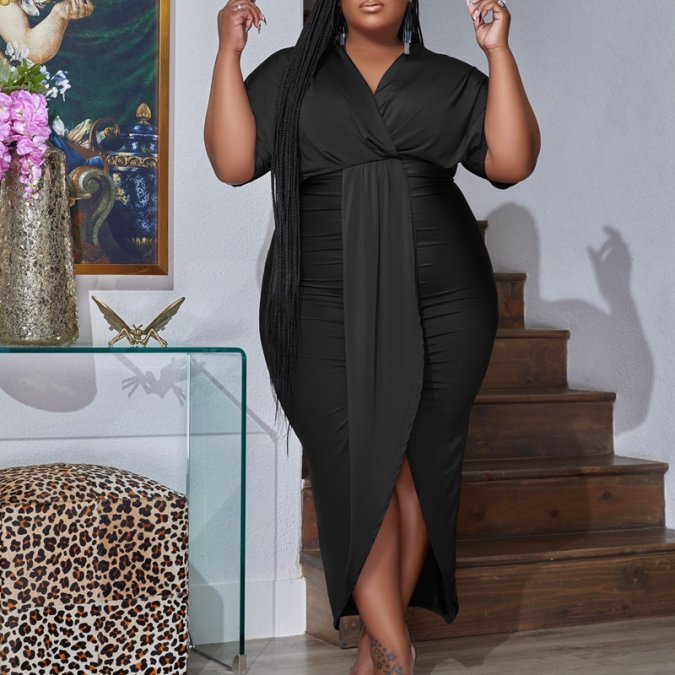
Plus-size garments experience more stress at seams than standard sizes. Fabric weight matters more, and stretch recovery becomes critical because curves demand fabrics that move with your body and snap back instead of sagging.
Best Natural Fibers for Plus Size Clothing
Natural fibers are the gold standard for plus-size apparel because they breathe, absorb moisture, and feel comfortable against skin.

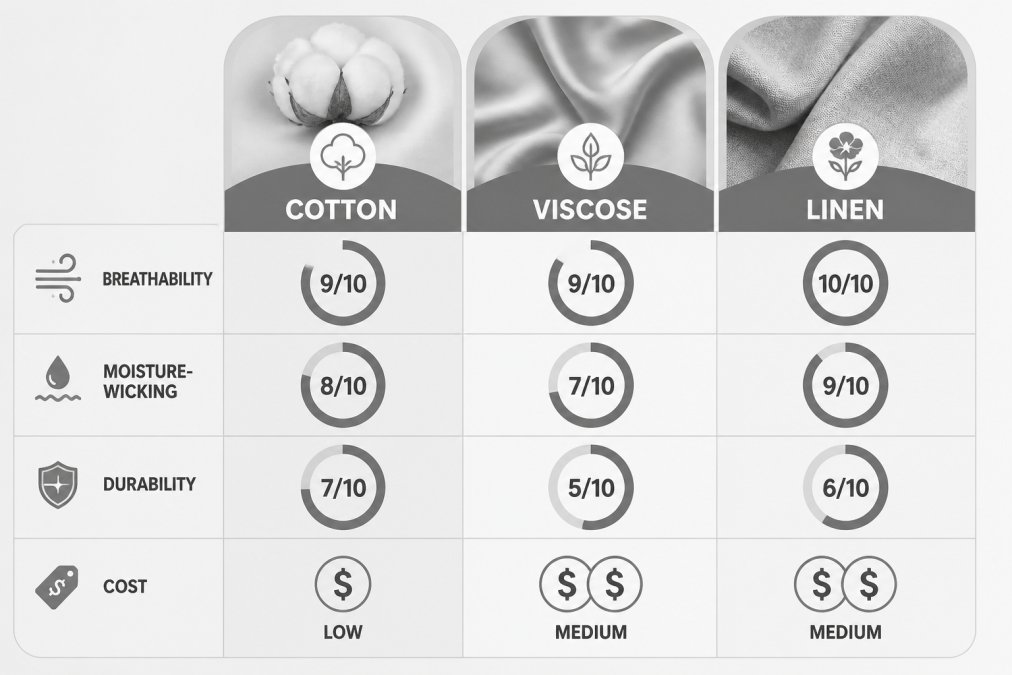
Cotton remains the most reliable choice for everyday wear. It's breathable, moisture-wicking, and hypoallergenic. Cotton jersey provides stretch and recovery without adding synthetic fibers. Look for cotton blends that include a small percentage of spandex or elastane for added stretch recovery.
Viscose and Rayon create beautiful drape and flow, popular in dresses designed for curvier figures. However, they're delicate and can lose shape if exposed to high heat or humidity. For plus-size pieces, viscose works best when blended with polyester for added durability. Tencel and Lyocell are premium versions offering better durability and environmental benefits.
Linen offers exceptional breathability and temperature regulation, ideal for warm weather. The challenge: it wrinkles significantly and can feel stiff without proper finishing.
Synthetic Blends and Stretch Recovery in Fabrics for Plus Size
Quality synthetics are essential for plus-size apparel because stretch and recovery matter when wearing larger garments that need to move with your body and return to original shape.
Spandex and Elastane are the stretch champions, added in small percentages (typically 5-15%) to create garments that snap back instead of sagging. A dress with 5% spandex will maintain its shape through a full day of wear. For activewear, look for 15-20% spandex to handle movement and sweat.
Polyester blends are durable and moisture-wicking. A 60% cotton / 40% polyester blend offers excellent wrinkle resistance, shape retention, and durability. Polyester also helps fabrics dry faster, which matters for plus-size pieces that take longer to air dry.
Nylon appears in premium plus-size activewear and swimwear because it's lightweight, durable, and has natural stretch recovery. Nylon resists pilling better than polyester and handles abrasion well at seams and stress points.
For plus-size apparel, a blend combining natural fiber breathability with synthetic stretch creates the ideal balance.
How to Check Fabric Quality in Clothing
Not all fabric quality is obvious from a product photo. Here's what to evaluate before buying plus-size apparel.
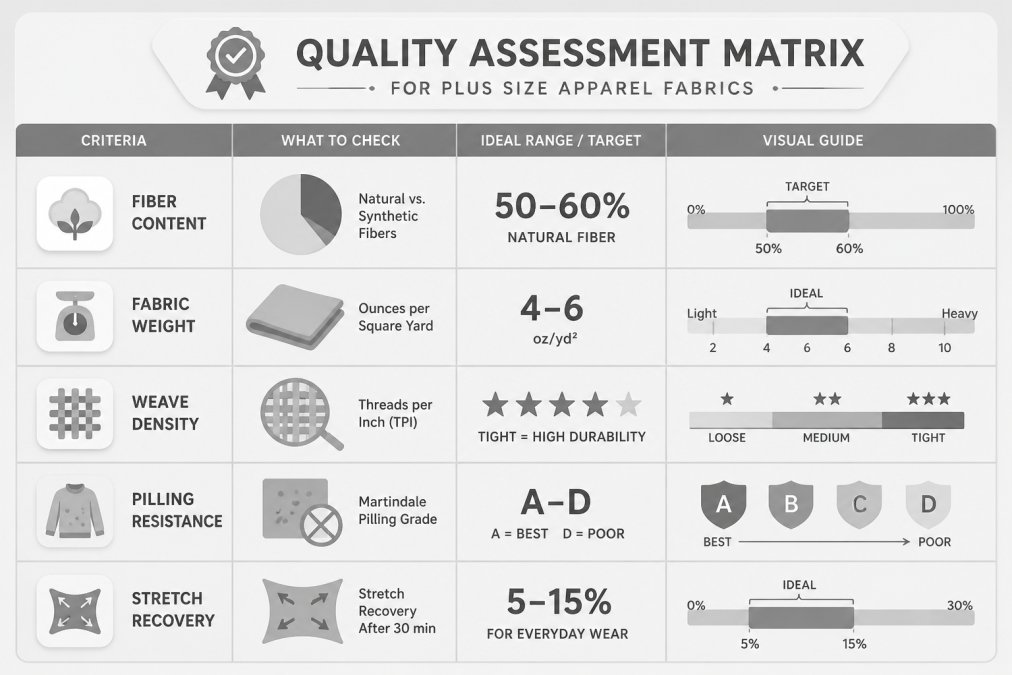
Check the Fiber Content Label. This is your first and most important filter. Look for these red flags:
- 100% polyester or 100% acrylic (uncomfortable for all-day wear)
- Less than 50% natural fiber in casual garments (won't breathe adequately)
- No spandex or elastane in stretch pieces (won't recover properly)
A quality label for a plus-size dress might read: "60% cotton, 35% polyester, 5% spandex."
Evaluate Fabric Weight. Lightweight fabrics (under 4 ounces per square yard) work for summer pieces. Medium-weight fabrics (4-6 ounces) suit most everyday clothing. Heavyweight fabrics (over 6 ounces) are ideal for winter pieces. For plus-size pieces, medium to heavyweight fabrics perform better because they support larger surface areas without sagging.

Look for Weave Density. Tightly woven fabrics resist pilling, last longer, and feel more substantial. A dense weave shows minimal gaps between threads. Higher thread count indicates better durability and longevity.
Test for Pilling Resistance. Pilling happens when loose fibers ball up on fabric surfaces. Quality fabrics resist pilling through tight weave construction and fiber selection. When shopping online, read customer reviews specifically for mentions of pilling.
Assess Drape and Structure. How fabric hangs on your body matters more in plus-size clothing. Fabric with good drape flows smoothly over curves without clinging.
Durable Fabrics for Plus Size Activewear
Activewear demands different fabric performance than everyday clothing. Plus-size activewear needs exceptional moisture-wicking, temperature regulation, and abrasion resistance because movement and sweat create additional stress on seams.
Moisture-Wicking Blends are non-negotiable for activewear. An 88% polyester / 12% spandex blend is standard for quality plus-size athletic wear because polyester naturally moves moisture away from skin and dries quickly.
Abrasion Resistance matters because larger garments experience more friction at stress points. Quality activewear uses tightly woven synthetics with reinforced seams in high-friction areas. Look for double-stitched seams and substantial fabric rather than flimsy construction.
Temperature Regulation is critical for all-day comfort. Quality activewear fabrics allow heat to escape while maintaining structure. Mesh panels in strategic areas improve airflow.
Finding quality fabrics for plus size apparel requires understanding how fabric composition, weight, and construction impact comfort and longevity. Prioritize fiber content and weave density over price, quality fabrics outlast cheaper alternatives by years.
At Trendy Attic Store01, our plus-size collection prioritizes these fabric standards across every piece. From the Plus Size Elegant Ruffle One Shoulder Mini Dress ($68.61) featuring breathable construction to our Plus Size Women's Hooded Sweater Top ($84.31) crafted from durable polyester, every item is selected for fabric quality that delivers comfort and style. Explore our Plus Size Outfits today and experience the difference quality fabrics make.
Frequently Asked Questions
What are the most breathable fabrics for plus size clothing?
Cotton jersey, viscose, and rayon offer superior breathability for plus size apparel. These natural fibers allow air circulation and moisture absorption, reducing heat buildup. Blends combining cotton with small percentages of spandex (2-5%) maintain breathability while adding stretch recovery. Avoid heavy polyester-only fabrics, which trap heat and restrict movement. Look for garment construction with ventilation panels in high-friction areas like underarms and inner thighs.
How do natural fibers compare to synthetic blends for plus size apparel?
Natural fibers like cotton and viscose excel at breathability and moisture absorption, making them ideal for everyday wear and sensitive skin. Synthetic blends with spandex or elastane provide superior stretch recovery and shape retention, essential for fitted plus size garments. Hybrid blends (80% natural, 20% synthetic) offer the best balance: the comfort of natural fibers with the durability and recovery of synthetics. Regenerative cotton and Tencel represent premium natural options with lower environmental impact and exceptional drape.
What should I look for in fabric quality when shopping for plus size clothes?
Check weave density by feeling the fabric weight and inspecting the weave pattern; tightly woven fabrics resist pilling and last longer. Examine seam construction and reinforcement at stress points like armholes and crotch seams. Test stretch recovery by gently pulling the fabric; quality materials spring back immediately without bagging. Look for hypoallergenic certifications if you have sensory sensitivities. Verify fiber content on labels, avoiding deadstock fabric that may have been stored improperly. Higher fabric weight (measured in grams per square meter) typically indicates durability in everyday garments.
Which fabrics prevent chafing and friction for plus size individuals?
Smooth, tightly woven fabrics like sateen and high-quality cotton jersey minimize friction and chafing. Garments with strategic seam placement away from inner thighs and underarms reduce irritation. Moisture-wicking synthetic blends move sweat away from skin, preventing the dampness that increases friction. Avoid rough weaves, loose knits, and textured fabrics in high-contact areas. Fabric weight also matters: heavier fabrics (200+ grams per square meter) provide better cushioning against friction than lightweight materials.
How does fabric weight affect the drape and fit of plus size clothing?
Lightweight fabrics (under 150 grams per square meter) create fluid drape and movement, flattering curves through soft structure rather than cling. Medium-weight fabrics (150-250 grams per square meter) offer balanced drape with enough body to maintain shape and provide coverage. Heavy fabrics (over 250 grams per square meter) create structured silhouettes and reduce transparency, ideal for layering and structured dresses. The best choice depends on the garment type: lightweight for flowing dresses and blouses, medium for everyday wear, and heavy for outerwear and structured pieces. Fabric composition also influences drape; viscose drapes more elegantly than cotton jersey of equal weight.
This article was written using GrandRanker